
King James Bible Study KJV
Salem Media GroupBooks & Reference
4.658.28K Reviews
- Version
- 5.7.18
- Installs
- 10.00M
- Age Rating
- Everyone
Screenshots


Our Review of King James Bible Study KJV
 Analysis by Appyee
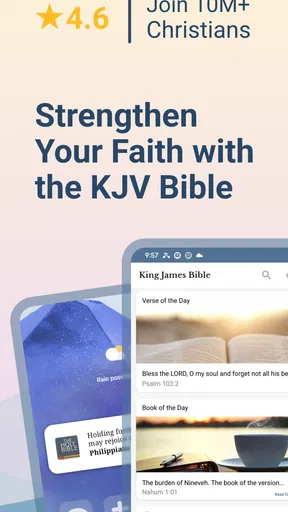
I found King James Bible Study KJV most useful when I treated it less like an app I open only for a quick quotation and more like a steady reading companion. It combines the King James Bible with audio reading, daily verses, and devotionals, so it can fit several different routines without asking me to switch between separate Bible, audiobook, and reflection apps. The language is deliberately traditional, and that is both its main appeal and its biggest consideration for new readers.
Developed by Salem Media Group, this free Books & Reference app is aimed at anyone who wants the KJV text close at hand on a phone or tablet. It is available for Everyone, runs on Android 8.0 or later, and has reached over ten million installs. Those figures make sense once you spend time with it: the app is straightforward enough for a first-time user, but it also supports a more deliberate pattern of reading, listening, bookmarking, and returning to familiar passages.
My overall impression is positive, especially for readers who already value the King James translation. I would not recommend it automatically to someone who wants modern wording, extensive academic notes, or a highly customizable study platform. For the right reader, though, it offers a practical way to build a repeatable devotional habit rather than simply providing another digital copy of the Bible.
How I built a dependable reading routine
I found that a dependable routine starts with choosing a time and a clear purpose, rather than trying to use every part of the app in each sitting. I keep the main reading modest on busy days and save audio or devotional reflection for moments when they genuinely fit. That approach makes it easier to return without turning a missed session into a reason to abandon the habit.
Starting with the text instead of the extras
The simplest way to use the app is to open the Bible and begin reading. That sounds obvious, but it is worth saying because the surrounding features can tempt a new user to jump between daily material, audio, and devotional content before settling into a comfortable rhythm. I got better results by choosing one book, reading a manageable passage, and using the additional tools only when they supported that session.
The KJV wording rewards a slower pace. Familiar phrases can feel memorable, while older expressions may require a second reading. On a phone, I found it helpful to pause rather than skim when a sentence felt unclear. The app works well in that role because the text is always the center of the experience; the other material is there to help create continuity around it.
A realistic everyday use case is a short morning routine. I can read the daily verse first, listen to part of a chapter while preparing breakfast, and then return later to read the same passage silently. That sequence gives the app more value than using the daily verse as a notification to dismiss. It also suits people whose attention changes throughout the day: listening works when the hands are busy, while reading works when there is time to concentrate.
Using audio without turning it into background noise
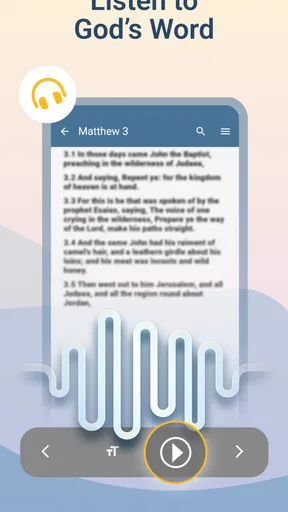
The audio Bible is one of the most practical reasons to choose this app over a basic digital Bible. I would use it during a walk, on public transport, or while doing routine household tasks. Still, listening is not always equal to studying. When a passage contains names, unfamiliar wording, or a dense sequence of events, I prefer to stop the audio and read the text directly.
That distinction matters for anyone deciding whether this can replace a printed Bible. It can make the KJV more accessible during moments when reading is inconvenient, but it does not remove the need for focused reading. I also would not treat audio as ideal for every setting. In a noisy environment, the flow can become easy to lose, and a quiet reading session is usually better for comparing nearby verses or noticing repeated wording.
Making daily verses part of a larger habit
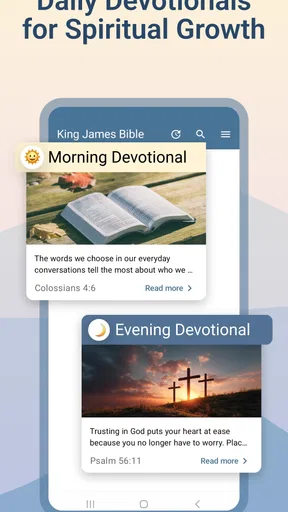
The daily verse and devotional material are useful as entry points, particularly on days when I do not have the energy to choose a longer passage. My preferred approach is to read the featured verse, consider its immediate context, and then continue into the surrounding passage. That small step prevents the daily content from becoming detached from the chapter it comes from.
This is also where the app differs from a paper bookmark or a simple notes app. The daily material gives me a prompt, while the Bible text gives me somewhere to follow that prompt. I would still keep a separate notebook for longer reflections, because a dedicated writing space is better for recording personal observations over time. The app is strongest at helping me return to Scripture, not at replacing a complete journaling system.
What the first session feels like
Installation is uncomplicated for a current Android device, and the app’s broad age rating makes it suitable for households where different family members use the same device. The free entry point is important: I can explore the reading and listening experience before deciding whether any optional purchases matter to me. In-app items range from $1.99 to $5.99 each, so I would review what an optional item adds before paying rather than assuming every reader needs it.
After opening the app, I recommend spending a few minutes learning where the Bible text, audio controls, daily verse, and devotional content sit. That small orientation period pays off because the best workflow is not necessarily the one that follows the app’s first screen. I prefer to establish a starting passage and a repeatable time of day, then use the extra sections as support instead of letting them dictate the entire session.
Settings and choices worth checking
Experienced users should look through the available reading and audio controls early, even if the default setup seems comfortable. A Bible app is used repeatedly, and small sources of friction become surprisingly noticeable after several weeks. I pay attention to text readability, how easily I can move between passages, and whether the audio controls are convenient enough for one-handed use.
Screen comfort is especially important with the KJV because older wording often benefits from unhurried reading. If the text feels cramped or tiring, I am less likely to continue a planned session. I would adjust the display for the device and room rather than copying someone else’s preference. A larger, calmer reading layout is usually more valuable than trying to fit as many verses as possible on screen.
Audio deserves its own check. Before relying on it during a walk or commute, I would test starting, pausing, and returning to the passage while the phone is not sitting directly in front of me. That reveals whether the controls suit the way I actually listen. If I am using headphones, I also prefer to begin playback before leaving home, since stopping to troubleshoot a control or connection can break the habit I am trying to build.
The daily content should be handled with similar intention. I would decide whether I want it to be the first thing I read, a midday prompt, or a closing reflection. The same feature can either support a routine or scatter it, depending on when it appears in the day. My advice is to give each part a clear job: Bible reading for sustained attention, audio for flexible access, and devotionals for reflection.
Small habits that make the app faster to use
One useful pattern is to keep a single ongoing reading route instead of choosing a new book every time. For example, I might read consecutive chapters during quiet sessions and use the daily verse separately. This reduces decision fatigue and makes it easier to remember where I stopped. When I want a specific passage, I can then treat that as a focused detour rather than losing the main thread.
Another effective habit is to pair the same passage with two modes. I can listen first to understand the broad movement of a chapter, then read selected verses slowly. This is more efficient than trying to study every line while audio plays, and it takes advantage of what each mode does best. Listening gives me continuity; reading gives me control over details.
I also recommend using the app in short, repeatable blocks rather than waiting for an ideal uninterrupted hour. A few minutes before work, a chapter during a lunch break, or a quiet reading session before bed can all work. The important point is consistency. The app’s combination of daily material and audio makes it easier to keep contact with the text even when the day does not allow a long study session.
Where it compares well with familiar alternatives
Compared with a printed Bible, the app wins on portability and flexibility. I can carry the KJV, listen to it, and move from a daily verse into a longer reading session without bringing a separate book. The printed edition still has advantages for distraction-free study, visible page memory, and writing notes in the margins. Someone who enjoys marking pages or wants to avoid screen time may reasonably prefer paper.
Compared with a generic e-book reader, this app feels more purposeful for devotional use because the daily verses and devotional material sit alongside the Bible rather than requiring me to organize everything manually. An e-reader may offer better typography or broader book management, but it does not necessarily provide the same focused path from a daily prompt to Scripture and audio.
Compared with a modern-language Bible app, the main trade-off is translation style. The KJV has a distinctive rhythm and vocabulary that many readers find meaningful, but a newcomer may understand a contemporary translation more quickly. I would choose this app for commitment to the KJV, not merely because it is free. If immediate clarity is my top priority, another Bible app may be a better first choice, especially for study groups where everyone uses current language.
Limits that become clearer with serious study
The app is not a complete replacement for every kind of Bible study. I would not choose it as my only tool if I needed extensive cross-references, original-language resources, scholarly commentary, or a large personal research library. Its strength is bringing the KJV text, audio, daily verses, and devotional reading together; it is less suited to building a detailed academic workspace.
The traditional translation can also create a learning curve. A reader who is unfamiliar with KJV vocabulary may mistake difficulty of phrasing for difficulty of meaning. I would keep a modern translation or a trusted reference nearby when a passage is unclear, while still using the KJV as the main text if that is the version I want to follow. That is not a criticism of the app itself, but it is an important practical limitation of choosing this translation.
There is also a difference between convenience and depth. Because the app makes it easy to move from a verse to audio or devotional content, I sometimes have to resist jumping away from the passage too quickly. A person who wants a quiet, linear reading experience may find the extra options distracting. In that case, opening directly to the chosen book and ignoring the surrounding sections is the better approach.
Optional purchases are another point to consider. The app is free to start, but some items cost between $1.99 and $5.99. I would only buy one after using the core experience long enough to identify a genuine need. For many readers, the free Bible, audio, daily verse, and devotional workflow may already cover the essential routine. Paying makes sense only when an optional addition clearly improves the way that particular person reads or listens.
Who will get the most from it
I think this is a strong fit for regular KJV readers, people rebuilding a devotional habit, and anyone who wants audio access without carrying a physical Bible. It also suits households looking for an approachable Bible app with an Everyone content rating. The combination of reading and listening is particularly helpful for users whose schedules change from day to day.
It can also work well for someone returning to the KJV after a long break. The daily verse offers an easy re-entry point, while the audio option lowers the effort required to revisit longer passages. I would encourage that reader to start with familiar books or short sessions rather than attempting an ambitious plan immediately. The goal is to make the app part of ordinary life, not another task to feel guilty about missing.
I would steer away from it if I strongly dislike older English, need advanced study tools in one place, or want a distraction-free paper-like experience. I would also hesitate to recommend it as the only resource for a beginner who has no support for understanding KJV expressions. In those cases, a modern translation, a printed study Bible, or a more research-focused app may serve better, either alone or alongside this one.
A mature workflow for regular users
After using the app for a while, I would settle on a three-part pattern. First, I read a selected passage when I can give it attention. Second, I use audio to revisit that passage during a practical part of the day. Third, I return to the daily verse or devotional material as a short reflection rather than as a substitute for the main reading.
That pattern keeps the features from competing with one another. It also makes the app useful in different circumstances: focused reading at home, listening while moving, and a brief reflective check-in when time is limited. The most advanced improvement is not a complicated setting; it is deciding in advance what each feature is for and repeating that arrangement until it becomes natural.
The current release is version 5.7.18, and the app supports devices using Android 8.0 or newer. Its average rating is 4.6 from around 330 thousand ratings, with roughly 58 thousand written reviews. I see those numbers as a sign of broad appeal, but not as a reason to ignore the translation and study-depth questions. A popular app can still be the wrong fit for an individual reader.
My final recommendation
King James Bible Study KJV earns my recommendation for readers who specifically want the King James Bible in a flexible mobile format. Its strongest qualities are practical rather than flashy: the text is easy to return to, audio makes the Bible available when reading is inconvenient, and daily verses and devotionals help create a dependable rhythm. The free starting point also makes it easy to test that rhythm before spending anything.
I would approach it with clear expectations. It is not the best choice for modern-language clarity, deep academic research, or a completely distraction-free reading environment. It is also worth checking the optional purchases carefully instead of assuming they are necessary. For a KJV reader who wants one familiar place for reading, listening, and daily reflection, however, the balance is convincing.
My advice is to install it, choose a short passage, listen once, and then read the same section slowly. If that combination feels natural, build a small daily routine around it. If the language remains a barrier or the extra devotional elements do not suit your style, another Bible format may serve you better. For me, the app works best as a steady companion: simple enough for everyday use, but capable of supporting more thoughtful habits when I use its features deliberately.
Verdict
Strengths of King James Bible Study KJV
- Includes the complete King James Version Bible offline.
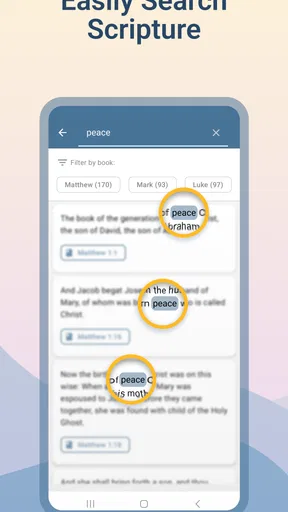
- Strong search tools help locate verses and keywords quickly.
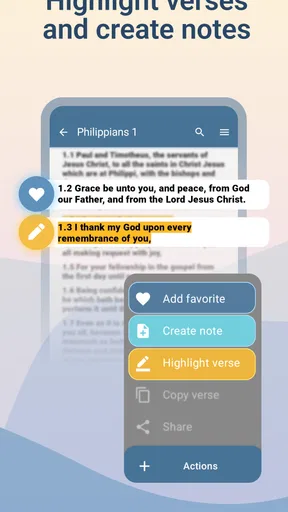
- Bookmarks and notes make personal study more convenient.
- Audio Bible support is useful for listening while traveling.
- Verse sharing makes it easy to send passages to others.
Limitations of King James Bible Study KJV
- The KJV’s older English can be difficult for new readers.
- Some study features may require an internet connection.
- Advertising can interrupt the reading experience in some versions.
- The interface may feel dated compared with newer Bible apps.
- Limited modern translations may reduce comparison options.
Other Releases by Salem Media Group
View All
Daily Bible Study: Audio, Plan
Books & Reference4.6

Daily Bible Devotion & Prayer
Books & Reference4.6

Salem News Channel
News & Magazines4.2

THM News
News & Magazines4.6
Similar Picks in This Category
View All
Google Play Books & Audiobooks
Google LLC4.7

네이버 - NAVER
NAVER Corp.3.5

Wattpad - Read & Write Stories
Wattpad.com3.7

King James Bible - Verse+Audio
Ozion4.8

Bible Offline-KJV Holy Bible
Bíblia Offline4.9

Amazon Kindle: Reading App
Amazon Mobile LLC4.8
Frequently Asked Questions
What is King James Bible Study KJV?
King James Bible Study KJV is a Bible-reading and study app centered on the King James Version of the Bible. It typically provides access to the Old and New Testaments, allowing users to browse books, chapters, and verses from a mobile device. Depending on the version installed, it may also include study tools, bookmarks, notes, search features, reading plans, and daily verse content.
Can I use King James Bible Study KJV without an internet connection?
In many cases, the main KJV Bible text can be accessed offline after the necessary content has been downloaded, which is useful for reading while traveling or in areas with limited connectivity. However, features such as advertisements, online devotionals, synchronization, audio streaming, or additional study resources may require an internet connection. It is best to check the app’s download settings and test offline access after installation.
Does the app include study tools such as notes, highlights, and bookmarks?
King James Bible Study KJV is designed for more than simple Bible reading and may include practical tools such as verse bookmarks, highlights, personal notes, and search. These features can help users organize passages for personal devotion, sermons, or group study. The exact selection can vary by app version, so users should review the current feature list before relying on cloud synchronization or advanced study functions.
Is King James Bible Study KJV suitable for beginners?
The app can be suitable for beginners because it offers a convenient way to explore the Bible by book, chapter, and verse, while search and bookmarking tools make navigation easier. However, the King James Version uses older English vocabulary and sentence structures that some new readers may find challenging. Beginners may benefit from using the app alongside a modern-language translation, dictionary, or trusted study guide.
Does King James Bible Study KJV cost anything, and are there advertisements?
The app may be available as a free download, but free access does not always mean that every feature is completely without cost. Some editions may display advertisements, offer optional in-app purchases, or reserve certain resources for a premium version. Before downloading, users should check the Google Play Store or App Store listing for current pricing, advertising information, subscriptions, privacy details, and any limitations affecting the reading experience.
